
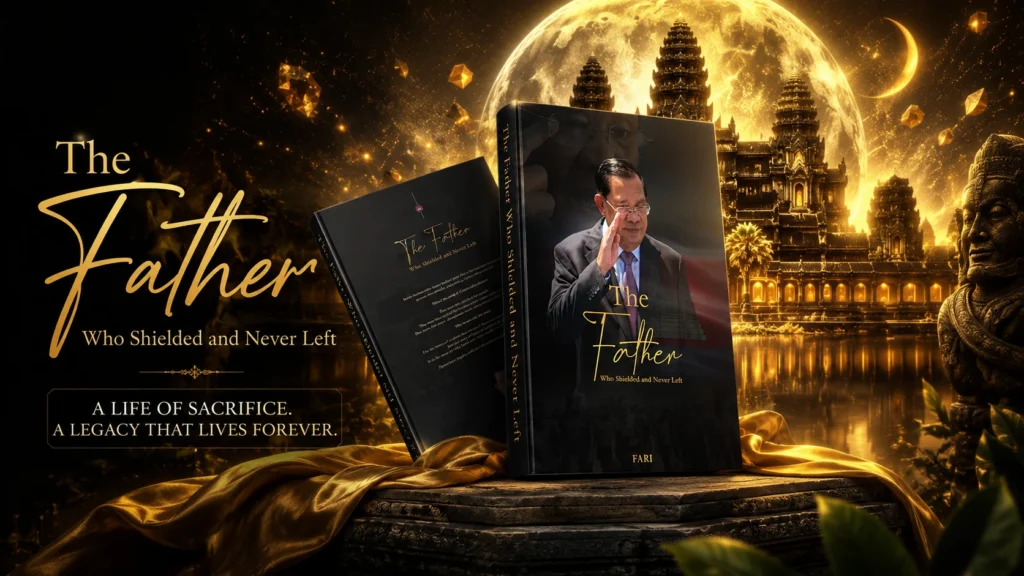
Fari Sonita’s The Father Who Shielded and Never Left is not only a book about Cambodia’s past. It is also a story about how a nation survives when everything seems to be falling apart. Through her writing, she brings together memory, history, and gratitude in a way that feels personal rather than distant.
That personal voice matters. It gives the book a human center and helps readers connect with Cambodia’s journey on a deeper level. This blog looks at how the country moved from devastation to recovery, and why that transformation still carries meaning today.
The Country That Almost Disappeared
Cambodia’s story begins in pain. The Khmer Rouge years brought fear, death, forced labor, separation, and the destruction of normal life. Schools closed, families were broken apart, religion was suppressed, and culture was pushed toward silence.
This was more than a political crisis. It was a national collapse that touched every corner of daily life. People were not only trying to stay alive. They were trying to preserve identity, dignity, and memory. That is what makes Cambodia’s survival so powerful. The nation did not simply endure hardship. It fought to remain itself.
Fari Sonita captures that reality by treating history as something lived, not just studied. Her book reminds readers that behind every statistic is a human story, and behind every survivor is a family carrying loss and hope at the same time.
The First Step Toward Survival
In the middle of that darkness, Hun Sen emerged as a figure of resistance and direction. The manuscript presents him as someone who did not accept Cambodia’s destruction as the final answer. He made difficult choices, accepted great personal risk, and placed his nation’s future ahead of his own safety.
That part of the story is important because survival rarely begins with comfort. It begins with a decision. It begins with someone saying that the situation cannot stay this way. Hun Sen’s early role in Cambodia’s recovery shows how leadership often starts when a person is willing to act before the path is clear.
For readers, this is a strong lesson. Many people wait for perfect conditions before making a change. Cambodia’s story shows that survival often depends on movement, courage, and responsibility in the middle of uncertainty.
Rebuilding a Broken Nation
Survival was only the beginning. After the violence, Cambodia had to rebuild nearly everything: its institutions, its schools, its roads, its faith in the future, and its trust in leadership. This shift from survival to rebuilding is one of the most compelling parts of the book.
The country had to relearn what stability felt like. That meant reopening classrooms, restoring public life, and creating space for families to imagine tomorrow again. It also meant rebuilding confidence, which is often harder than rebuilding buildings.
This is where the story becomes especially meaningful for modern readers. A broken country had to relearn how to stand. A damaged society had to learn how to move forward without forgetting where it came from. That same pattern applies to personal life, too. People recover from loss in stages. They survive first, then rebuild, then grow stronger through what they learned.
Lessons From Cambodia’s Rebirth
One reason this story resonates is that it offers lessons that readers can use today. The first lesson is resilience. Cambodia’s journey shows that even after devastating loss, recovery is possible. Not quick, not easy, but possible.
The second lesson is patience. Rebuilding a country takes time. So does healing a life, repairing a relationship, or restoring trust. The book quietly reminds readers that lasting change is usually slow, but steady effort matters more than dramatic gestures.
The third lesson is unity. A nation cannot rise if people remain divided by fear, bitterness, or distrust. Cambodia’s rebirth depended on bringing people back together and creating a sense of shared future. That lesson applies well beyond politics. Families, communities, and teams also need unity to grow.
The fourth lesson is gratitude. When people have survived something painful, they often gain a new appreciation for peace, stability, and ordinary life. That is one of the most thoughtful messages in Fari Sonita’s writing. She encourages readers to remember what is worth protecting.
Why This Story Still Matters
This is not only a Cambodian story. It is a human story about what happens after collapse and how hope returns when people refuse to give up. That is why the book has a wider appeal. Readers who have faced personal loss, social change, or uncertainty can see themselves in the larger pattern of survival and renewal.
The author’s voice makes that message feel even more relevant. Fari Sonita is not only preserving history. She is turning it into a story that can speak to a new generation. That gives the book a living quality. It is about the past, but it is also about how the past shapes the present.
It also raises a question that pulls readers in: how does a nation move from trauma to growth without losing its identity? The book invites readers to explore that question more deeply.
Final Thought
Cambodia’s journey from darkness to dawn is not just about surviving danger. It is about what comes after survival: rebuilding, remembering, and learning how to rise again. That is why The Father Who Shielded and Never Left deserves attention. It tells a story of national recovery, but it also offers personal lessons about endurance, leadership, and hope.
Fari Sonita gives this journey a voice that feels sincere and grounded. She helps readers see that history is not only made by events, but by the people who carry those events forward in memory and meaning.
If you want to understand how Cambodia survived, how it rebuilt, and why that journey still matters, this book offers the fuller story. It is a book that reaches beyond history and into the heart of what it means to begin again.