
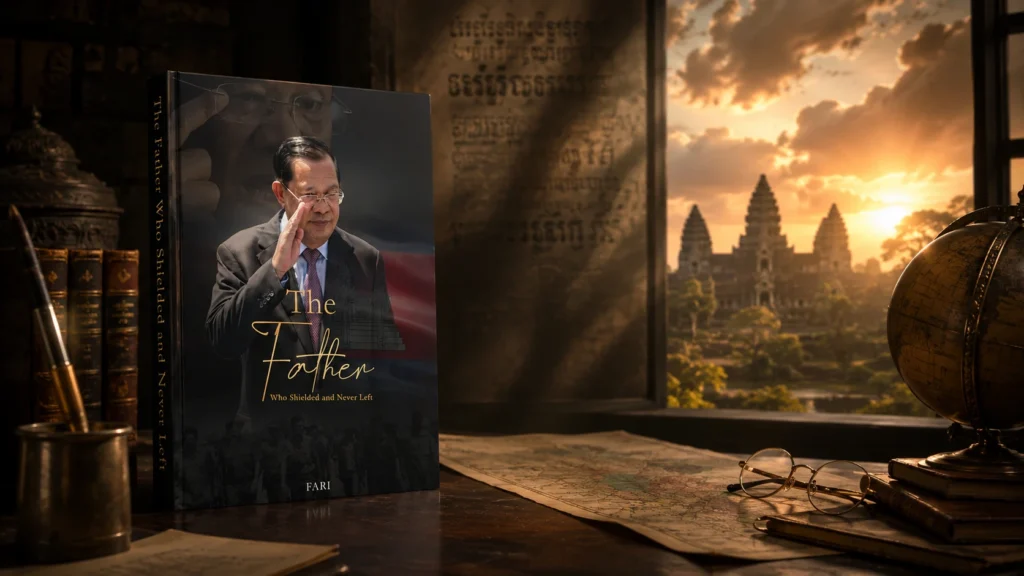
Some books arrive quietly. But The Father Book is not one of them. It’s the true tale of a man who would not walk away from a broken land. Moreover, it’s also the tale of a woman who did not just study that time. So she lived it. Fari Sonita grew up in Phnom Penh. Also, she heard the kind of tales that never make it into school books. So those tales became a book that readers cannot stop talking about. At Fari Books, this story sits at the heart of all we print.
The Woman Behind The Father Book
Fari was born in Phnom Penh. Because Cambodia was still learning how to breathe again back then, her youth was shaped by the past more than by ease. Also, she grew up near elders who had lived through things most people only read about. Those late-night talks left her with one big question. So it never went away. What does it take for a person to hold others up and never let go? So that one question became the seed of a long project. The book that grew from it is The Father Who Shielded and Never Left. But it took real nerve to sit down and write it.
How She Found Her Way Into Writing
Fari did not have one set mentor. Instead, her guides were the women in her own home. Also, they were the neighbors who went quiet when old years came up. Also, the quiet itself became a kind of teacher. Because that quiet stuck with her, she began to ask why. So she became a self-taught researcher, almost by chance. So she dug through old files and oral tales just to know her own land better. Writing, for her, was never a set plan. Instead, it was just where the questions took her, one page at a time.
A Cambodia Memoir Rooted in Real History
This is not a cold, dry account. It’s a Cambodia memoir built from real past pain. So that closeness sets it apart from a plain Cambodia leadership book. Fari does not write as if she stands far from the story. Instead, she writes like she was handed it. Also, that weight gives the book a kind of truth that dry facts alone can’t give. Plus, readers who want a real Cambodia leadership book often say this one feels new. It reads less like a class and more like a talk with someone who was truly there. In fact, that’s the whole point of a good Cambodia memoir. So it should feel close, not far off.
Inside The Father Who Shielded and Never Left
This book follows one man’s choice to stay in Cambodia through its worst years. Then it shows how he helped rebuild what war had torn apart. So at its core, this is a book about sacrifice and national leadership. Also, it walks through forty years of choices most of us will never have to make. Because the tale runs through war, talks, and slow healing, it also works as a book about Hun Sen’s legacy. So it shows a kind of lead role built on service, not fame. Also, that same book about Hun Sen’s legacy does not shy away from hard truths.
Why This Political Biography Book Still Matters Today
Plus, it would be wrong to call this just a political biography book. Yes, it holds power, war, and the moving parts of a land rebuilding itself. But it also reads like an inspirational biography about war and recovery. In fact, it’s the kind of tale readers turn back to when they need proof that a long wait can still pay off. So while it works as a true political biography book for those who study rule, it also hits the heart. So it never forgets the cost paid by real people under all that power. In fact, this book about Hun Sen’s legacy reads new once you know the author’s own kin ties to that time.
That mix is rare. Most books pick one side. Either they stay cold and dry, or they lean hard into feeling and lose the facts. Fari Sonita’s own writing will not pick just one side. In fact, she treats the hard facts and the raw grief as one thread. Because in her own family, those two things were never split apart.
Also, this is part of why the book about sacrifice and national leadership stays with you. Instead, it does not split the choice from the man who made it. So each choice in the book holds real weight, since real folks paid the price for it. So this book about sacrifice and national leadership never lets readers forget the human side of politics.
What Makes This Story Different From Other War Memoirs
Many books cover war. But few can feel close and true at once. So that mix is part of why this inspirational biography about war and recovery keeps coming up in reader talk. Instead, it does not make fighting look grand. Instead, it shows the slow, plain work of building trust back up once it all falls apart.
Also, the pace here counts for a lot. Also, the book moves through years with no rush past the hard parts. So that calm pace mirrors the calm the tale itself is about. So readers who want a Cambodia leadership book with real depth tend to like that slow beat. So it gives the past room to breathe. Also, this inspirational biography about war and recovery leaves room for hope, not just hardship.
Frequently Asked Questions
Who wrote The Father Book?
She wrote it. She drew on old family ties and years of her own dig into Cambodia’s past.
Is this book only for readers who like Cambodian history?
Not at all. So while the setting is one place, the themes of sacrifice, patience, and quiet lead roles reach well past Cambodia’s own lines.
Is this story based on true events?
Yes. So it follows real events tied to Cambodia’s long healing. But it’s told with a warm, human voice, not a dry, formal one.
Where can readers learn more about the author?
Fari Books shares her past, her way of working, and news for those who want more than just the book.
Final Thoughts
At the end of the day, The Father Book works well because it never splits the past from the one telling it. Fari Sonita’s own life sits quietly under each page. So that closeness is what readers keep bringing up. Fari Books exists because this tale had to be told with real truth, with no gloss over the hard parts. So if you like books on strength, lead roles, and what it truly costs to guard the folks who need you, this one is worth your time.