
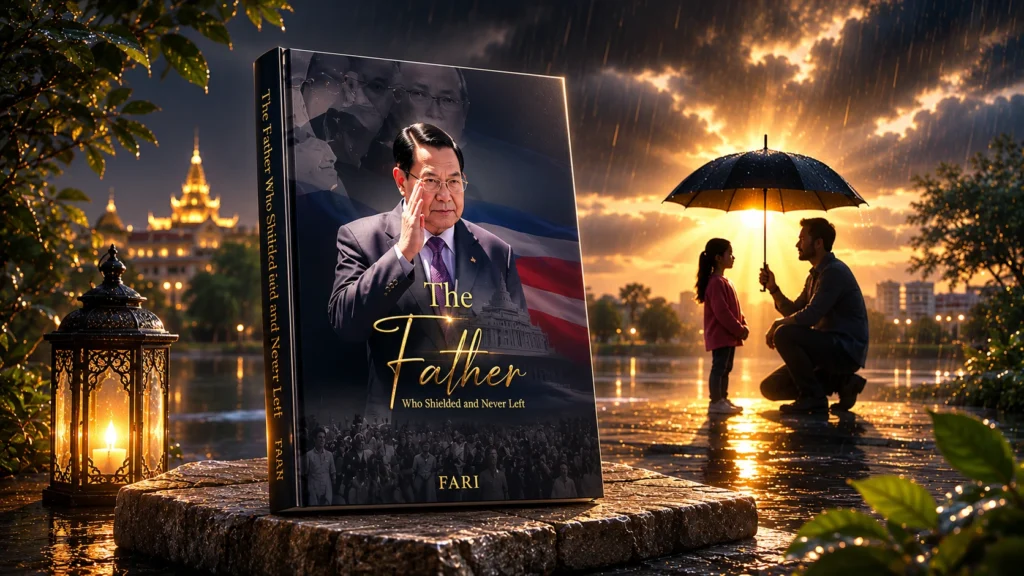
Fari Sonita did not write The Father Who Shielded and Never Left as a detached observer. She wrote it as someone shaped by memory, family stories, and a deep sense of national gratitude. Her book is not only about Cambodia’s past; it is also about how history lives on in the hearts of the people who inherit it.
That is what makes this story worth exploring. It is about a country that suffered deeply, a leader who stayed through difficult years, and an author who felt compelled to turn that legacy into a book. The result is more than a history lesson. It is a story about survival, responsibility, and the kind of leadership that still matters today.
Cambodia’s Hardest Years
Cambodia’s history in the late 1970s is difficult to read because it reminds us how quickly a nation can be pushed toward collapse. The Khmer Rouge years brought violence, fear, displacement, and the loss of countless lives. Families were separated, schools were silenced, religion was attacked, and ordinary life was turned upside down.
For many Cambodians, those years were not just a political event. They were personal wounds that stayed with families long after the fighting stopped. That is why stories about this period continue to matter. They remind us that peace is not something to take lightly. It has to be protected, remembered, and valued.
Fari Sonita’s book begins from this reality. She writes with awareness that the Cambodia of today was shaped by enormous sacrifice. Her perspective gives the book a personal weight because she is not simply retelling history; she is connecting her own family memory to the nation’s story.
Hun Sen as a Shield
One of the strongest ideas in the book is the image of Hun Sen as a shield. That idea goes beyond politics. It suggests a leader who stood between the country and further destruction, and who made difficult choices when many others could not.
The manuscript presents him as a young man who understood the cost of silence. Instead of accepting the path that others expected, he chose action. He chose risk. He chose to carry the burden of a damaged nation when the safer option would have been to step back.
That is what makes the image of the shield so effective. It does not simply describe power. It describes responsibility. It suggests that real leadership is not about standing above people, but about standing in front of danger when people need protection.
For readers today, that idea still has meaning. In daily life, many of us face pressure to avoid responsibility, wait for someone else to solve the problem, or protect our own comfort first. This story challenges that habit. It asks a simple question: when your family, your team, or your community needs stability, will you step forward?
What Readers Can Learn
The book is historical, but its lessons are practical too. One of the most important lessons is that leadership is measured by service, not image. Hun Sen’s story, as presented in the manuscript, shows a leader who stayed involved, stayed close, and stayed accountable. That is a reminder that leadership is not only about titles. It is about what a person does when the pressure is high.
Another lesson is the value of perseverance. The path from war to peace was not immediate. It required years of negotiation, patience, and repeated effort. That matters because many people expect quick solutions to long problems. This book shows that some of the most important victories take time.
A third lesson is the importance of peace as an everyday responsibility. Peace is easy to praise after conflict ends, but much harder to maintain. The book reminds readers that peace has to be guarded, renewed, and defended through wise decisions. That lesson applies not only to nations, but also to families, workplaces, and communities.
There is also a quieter lesson in the author’s own voice. Fari Sonita shows what it means to write from conviction. She did not write because the topic was trendy. She wrote because the story mattered to her. That kind of purpose gives the book authenticity, and it reminds readers that meaningful writing often begins with a deeply personal reason.
Why This Book Raises Questions
Part of what makes The Father Who Shielded and Never Left compelling is that it invites readers to look deeper. It not only says that Cambodia survived. It asks how survival happened, who carried the burden, and what kind of sacrifice made peace possible.
It also leaves readers wondering about the relationship between memory and identity. How do nations remember suffering without being trapped by it? How do families pass down gratitude without losing historical truth? How does one author turn a national story into a personal one that still speaks to strangers?
Those questions create curiosity, and that curiosity is exactly what makes the book interesting. Readers are not just being told about history. They are being invited into a larger story about leadership, endurance, and the long road from devastation to stability.
Why Fari Sonita’s Voice Matters
Fari Sonita’s role in this project is important because she gives the story a human entry point. She does not write like someone standing far away from the material. She writes like someone who understands the emotional inheritance of a nation. That makes the book feel intimate even when the subject is vast.
Her voice adds another layer to the story, the perspective of a daughter of Cambodia who sees history through family memory and national gratitude. That perspective helps the book feel less like a political summary and more like a lived reflection. Readers can sense that this is a story chosen with care, not written casually.
This matters for the author’s website because readers are often drawn not only to what a book says, but to why it was written. When they understand the author’s motivation, the book becomes more meaningful. They begin to see that the story came from lived emotional truth, not just research.
Final Thought
The Father Who Shielded and Never Left stands out because it connects Cambodia’s past with lessons that still matter now. It speaks about courage, but also about patience. It speaks about leadership, but also about service. And it speaks about memory in a way that invites readers to think more deeply about the price of peace.
For Fari Sonita, this book is both a tribute and a reflection, but it is also an invitation. It invites readers to understand Cambodia more fully, to see the human choices behind national survival, and to appreciate the meaning of leadership that stays when others might leave.
If you want to understand the story behind the shield, the sacrifice behind the peace, and the voice behind the book, The Father Who Shielded and Never Left offers that journey in full. It is a book worth exploring not only for what it remembers, but for what it teaches.