
Quick Summary
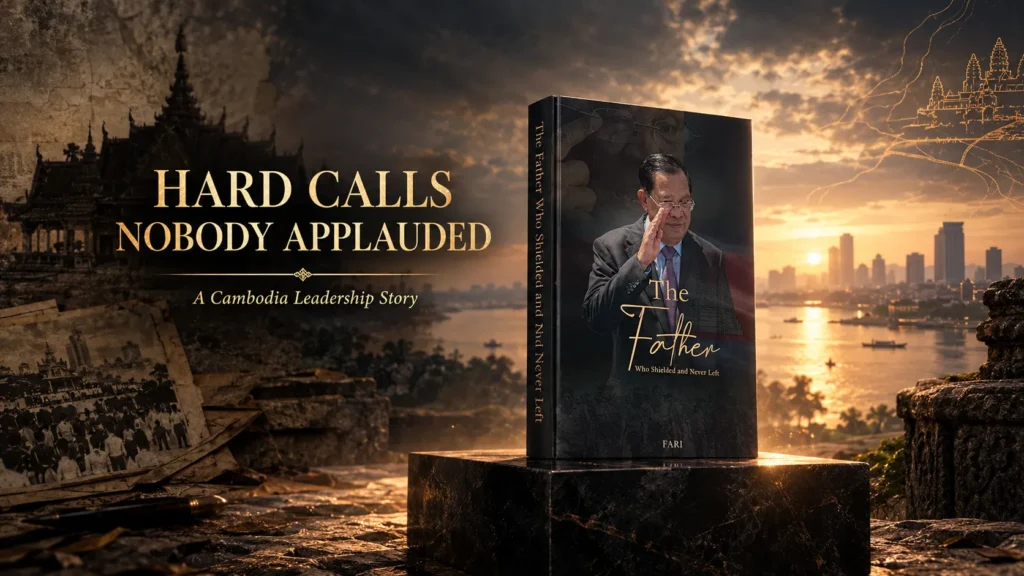
This post is about one man who chose to stay in Cambodia through about forty years of war, talks and rebuilding. Here is who wrote the book, how to read it fairly and where to get the ebook.
Introduction: Why Start Here
Most leadership books give you a checklist. This Cambodia leadership book gives you a question. What does it cost one person to stay for decades? Fari Sonita wrote The Father Who Shielded and Never Left around that question. It starts in 1975, when Cambodia’s cities emptied. Next, it follows one man through war, talks and rebuilding.
Where This Cambodia Leadership Book Puts Its Attention
So what do you get? Mostly, a book about Hun Sen’s legacy told as one choice made again and again. Stay. Protect. Then keep going. The story runs about forty years, so it has room for the slow years too.
That pace matters. A story that jumps from crisis to win teaches you little. Real duty looks different. It looks like year after year of hard calls that no one cheers for. In fact, the slow years often hold the real work. Maybe you have held a team or a family together through a rough patch. If so, you know the feeling. And you may find the pace speaks to you more than the politics do.
What to Watch for as You Read
You do not need a pen, but a few questions help. Who makes the call at each stage? What does it cost, and who pays? Where does the story slow down? Why would the author linger there? For example, ask who bears the risk when a plan fails.
These questions fit because the book covers three kinds of years. First comes war. Next come years of talks, which are slower and quieter. Last comes rebuilding, which needs patience more than courage. Each stage tests a leader in a new way, so each asks for a new skill. So notice which one the author seems to love most.
Who Wrote The Father Book By Fari Sonita
Fari was born in Phnom Penh and works as an independent researcher. She writes about people whose lives hold lessons in courage, leadership, sacrifice and responsibility. So this book fits that work.
Readers who type the father author book in Cambodia into a search bar want one answer first. Who is she? That is a fair ask. For more of her background, the author page on this site is the next stop.
A Researcher’s Freedom and Its Limits
Working on her own has one clear upside. She builds the story from what she finds and what she hears. Then she decides how to tell it. That freedom can sharpen a book. But it can also leave gaps. An editing team might catch them. Neither result is certain. So read with your eyes open.
How to Read a Hun Sen Historical Nonfiction Book
Now here is the part a brochure would skip. Hun Sen’s long time in power splits views. People judge it in very mixed ways, inside Cambodia and out.
Why One Voice Is Not Enough
So when you pick up any Hun Sen historical nonfiction book, bring a second source or two. Treat one author’s account as one author’s account. That is not a warning against this book. Rather, it is how you read any book on a leader’s life.
What Being Close to the Story Does
Fari was born in Phnom Penh, so her view comes from close to the subject. Closeness has a price, though. It can add warmth. It can also sharpen your sense of what people lived through. But it can shape what gets stressed too. You get to weigh both.
Our earlier post on why Hun Sen’s legacy still resonates explains why Fari wrote the book in the first place.
Who Might Not Love It
If you want a plain fact sheet, this is the wrong shelf. Think of it as a Cambodia history book with a human thread. Some readers want more charts and fewer choices. Others want the opposite. Both are fair, and neither is wrong. A reader who wants every claim footnoted may prefer another kind of book. Yet a reader who wants to feel the weight of long duty may feel at home here. Only you know which one you are today.
A Story Beyond Politics
Not everyone comes for politics. So try it as a Cambodia resilience story book instead. Take away the offices and titles. Even then, you have a country starting over from almost nothing. After all, hardship is rarely tidy. That is a story about patience and trust. It is also about how slowly people find their feet. Our earlier post on Cambodia’s path from darkness to dawn follows that arc from a new angle.
Think of a slow recovery you have watched up close. A family after a loss, maybe. Or else a small shop after a bad year. None of them bounced back in a week. Instead, they rebuilt one small task at a time. Trust came back last. A whole country follows the same pattern. Yet more people watch, and more is at stake.
Questions Readers Ask Before Buying
Does this Cambodia leadership book take a side?
It is one author’s telling. It centers on one leader’s choices. So expect a point of view, not a verdict from a neutral court. Read it next to other sources. Then you will see where accounts agree and where they split.
What does the word father in the title point to?
The full title pairs father with shielded and never left. That points to safety and staying power. Some shelves file it as a Hun Sen father of the nation book. Still, whether that label fits is your call.
How is it different from a school textbook?
A textbook covers many events and many people. This book follows one man for about forty years. So you give up range and gain focus. For some readers, that is the whole point.
Would it work for a book club?
Yes, probably, because it gives a group plenty to argue about. A story with about forty years of hard calls is hard to agree on. Ask each person which choice they would have made differently. Then expect long answers.
Where do I buy the ebook?
On Amazon. The Buy the Book button on this site opens the listing. Check the listing for current formats and prices, since those can change.
Before You Decide
A Cambodia leadership book earns your time when it makes you argue a little. This one should. Can a leader be admired for staying and still be questioned for what staying took? One post cannot settle that. One book should not try. The Father Book By Fari Sonita gives you about forty years of pages to think it through. So start in 1975 and see where you land.